Author: Revivera Medical Team · Last updated: 25 October 2026
“How long does it take?” is one of the first questions patients ask us when they come for their first drip. The answer depends on the type of drip: most take about 45 minutes, while some, such as NAD+ and iron, are given more slowly. In this article you will find out how long each type of drip takes, what a session at Revivera is like, how to prepare and what you feel during the drip.
How long a drip takes, by type
| Drip | Approximate duration |
|---|---|
| Essentials drips (vitamins, minerals, hydration, vitamin C and others) | 45 minutes |
| Iron drip | about 120 minutes |
| Glutathione drip | 45–60 minutes |
| Premium drips | 60 minutes |
| Revivera Belleza Cocktail drip | 60 minutes |
| NAD+ drip | 90–120 minutes |
The exact duration depends on the composition of the drip and on each person’s tolerance. Some substances are deliberately given more slowly: the NAD+ drip, for example, takes at least 90 minutes, because too fast a rate can cause a feeling of warmth or chest pressure [1].
The medical consultation beforehand adds to the time of the drip, and for some drips, such as iron, so does a short observation period afterwards [2].
What happens during a session at Revivera
- The free medical consultation. Before your first drip, the doctor goes over your medical history, the medication you take and your goal, reviews any blood tests and decides whether the drip is suitable and in which protocol.
- Setting up the drip. The drip is set up by medical staff. You only feel the prick when the catheter goes into the vein.
- Supervised administration. Throughout the drip, a specialist doctor in intensive care (ATI) or emergency medicine is always present in the clinic. The infusion rate is adjusted for each patient.
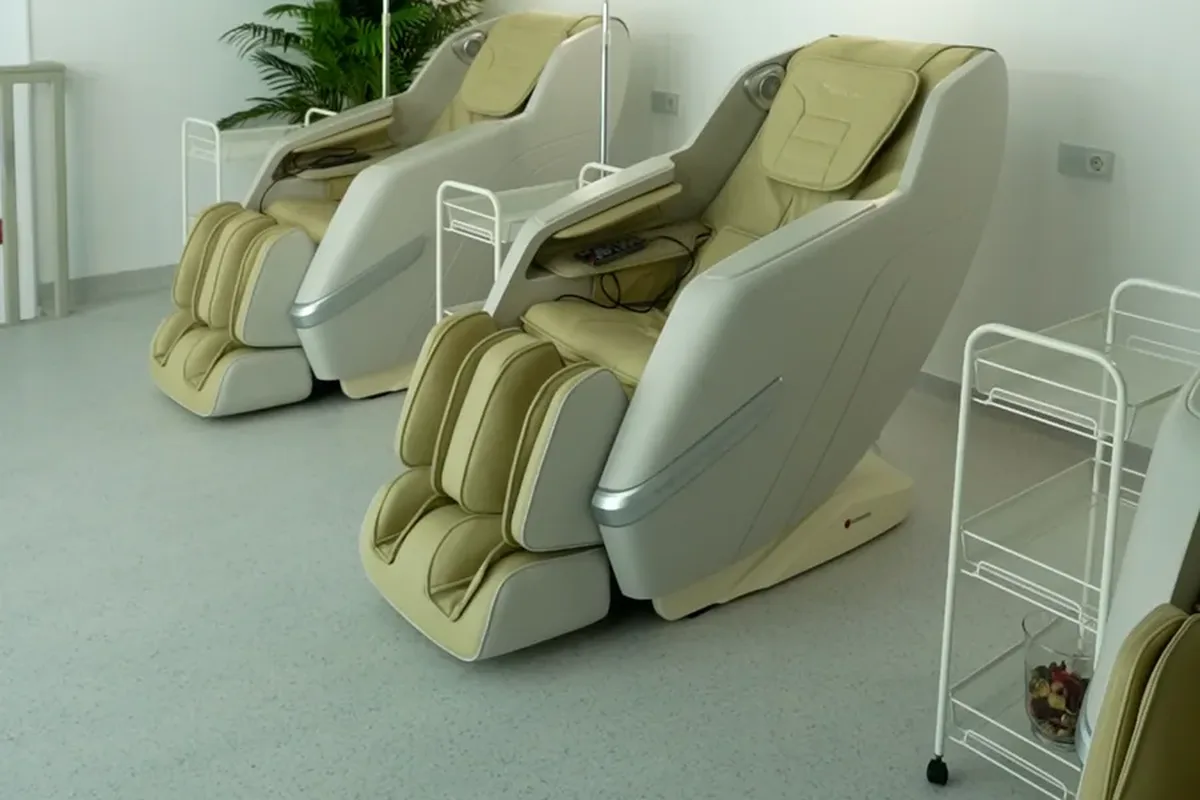
- Comfort. You sit in a massage chair, in a quiet space. You can read, use your phone or relax.
- Recommendations at the end. The doctor tells you whether and when you need another session. The doctor sets how often you need a session, based on your goal and your health.
How to prepare for a drip
- Eat something light before the session; do not come on an empty stomach.
- Stay hydrated: drink water beforehand, as this makes the veins easier to find.
- Bring recent blood tests, if you have them, and a list of the medication and supplements you take.
- Wear comfortable clothes, with sleeves that roll up easily.
What you feel during the drip
Most patients feel nothing special apart from the prick at the start. Sometimes you may feel cold in the arm, a passing feeling of warmth or mild discomfort at the puncture site. Tell the nurse or doctor about any unusual sensation; the rate of the drip can be adjusted straight away.
After most drips you can go straight back to your usual activities, depending on the medical recommendations and the type of drip you had.
Do I need an appointment?
It is not required. The clinic is open daily from 10:00 to 20:00, weekends included. We recommend booking to avoid waiting, especially for longer drips such as NAD+.
See all IV therapies at Revivera.
Frequently asked questions
How long does a vitamin drip take?
About 45 minutes for Essentials drips and 60 minutes for Premium drips.
How long does an NAD+ drip take?
Between 90 and 120 minutes, at least 90 minutes, depending on tolerance.
How long will I be at the clinic in total?
The length of the drip, plus the medical consultation beforehand and, for some drips, a short observation period.
Does the drip hurt?
You only feel the prick when the drip is set up. The infusion itself does not hurt.
Can I go to work after the drip?
After most drips, yes. The doctor tells you at the end if there are any special recommendations.
Can I drive after the drip?
Generally yes, depending on the type of drip given, as recommended for each patient after the medical consultation.
Scientific sources
- Reyna K. et al. (2026). Intravenous infusion of nicotinamide adenine dinucleotide (NAD+) versus nicotinamide riboside (NR): a retrospective tolerability pilot study in a real-world setting. Frontiers in Aging. https://pmc.ncbi.nlm.nih.gov/articles/PMC12907335/
- European Medicines Agency (2013). Intravenous iron-containing medicinal products (evaluarea riscului de reacții alergice). https://www.ema.europa.eu/en/medicines/human/referrals/intravenous-iron-containing-medicinal-products